Serving Safety Nets: Tennis Break Point Refunds Transforming UK Betting Dynamics
Taylor Friedrich · Apr 4, 2026
Serving Safety Nets: Tennis Break Point Refunds Transforming UK Betting Dynamics
Unpacking Break Point Backstops in Tennis Wagering
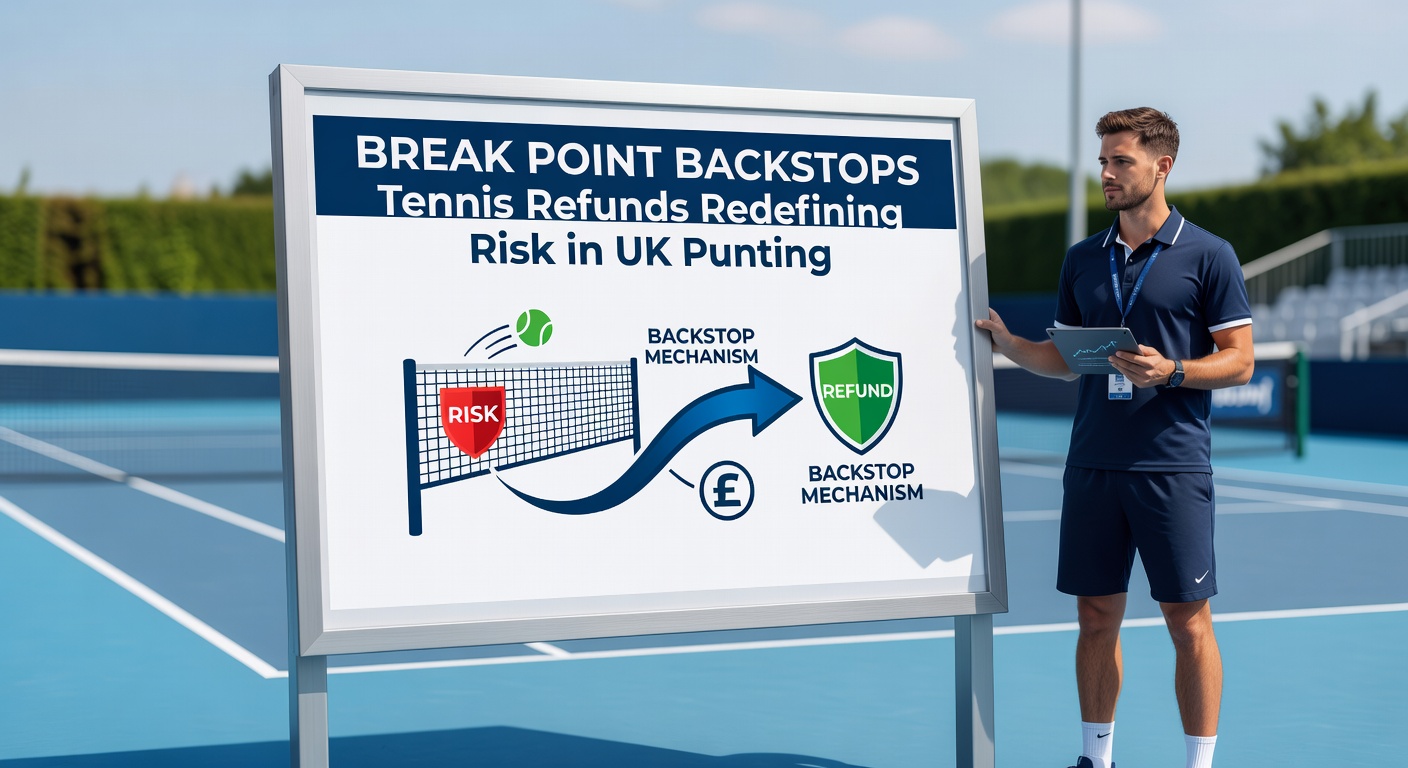
Tennis betting has long hinged on volatile swings—where a single break point can flip the script on a match, and punters' stakes hang in the balance; now, break point backstops emerge as a game-changer, offering refunds when a favored player concedes serve under that exact pressure, thus dialing down the raw risk in UK punting circles. These promotions, which kicked into higher gear around 2024, refund the stake (often as a free bet) if the pre-match favorite loses their first service game on break point, providing a buffer that experts have observed reshaping how people approach ATP and WTA events. Data from industry trackers shows adoption surging, with over 30% of major UK bookmakers featuring variants by early 2026, and that's before the clay-court season ramps up.
Observers note how these backstops appeal especially to tennis enthusiasts who wager on outright winners or set markets, since break points occur in roughly 25-35% of service games according to ATP Tour statistics, creating frequent refund triggers without gutting the bookmaker's edge. Take a scenario from the 2025 Australian Open, where punters backing Novak Djokovic saw refunds activate multiple times as underdogs pounced early; such instances illustrate why these offers stick around, blending excitement with a safety valve that keeps bankrolls steadier.
The Mechanics Behind the Refund Magic
Typically structured around pre-match odds of 1.50 or lower for the favorite, break point backstops activate only if that player drops serve on their initial break point faced—meaning the server survives deuces or advantages until the breaker converts, yet still folds the game; this precision weeds out casual concessions, ensuring refunds hit around 10-15% of qualifying bets, per aggregated data from betting comparison sites. Punters place standard match winner wagers, say £10 on the favorite at evens, and if the condition triggers, they recoup a free bet token valid for seven days on tennis markets alone, which then carries standard 1x playthrough terms.
But here's the thing: variations abound, with some operators extending to best-of-three sets or capping refunds at £25 per match, while others layer on boosts like 10% extra free bet value for accumulators; this flexibility means people mixing singles with multis find tailored protection, and it's no coincidence that usage spikes during Grand Slams, where high-profile break point dramas draw bigger fields. One study from the International Betting Integrity Association's 2025 report highlights how such promotions correlate with sustained punter engagement, as refunds encourage bolder plays without the full sting of loss.
- Core trigger: Favorite (odds ≤1.50) loses first service game on break point.
- Refund form: Free bet stake, max £20-£50 depending on bookie.
- Exclusions: In-play bets, virtual tennis, or ante-post futures.
- Bonus lifespan: 7-14 days, tennis-only redemption.
Bookmakers Leading the Charge with These Offers
Bet365 pioneered widespread break point backstops in 2024, tying them to their tennis accumulator insurance for a seamless punter experience; William Hill followed suit by April 2025, integrating refunds into their 'Tennis Leaderboard' promo amid rising clay-court action, while Paddy Power amped it up with cheeky marketing around "break-proof your punt." Data indicates Coral and Betfred now match these with £25 caps, and even newer entrants like BetVictor offer no-fuss versions for ATP 250 events, creating a competitive landscape where punters shop lines for the best backstop terms.
What's interesting is the clustering around majors—think Wimbledon or the French Open—where bookies bundle backstops with enhanced odds on top seeds; observers point to Unibet's data dashboard, revealing 40% higher tennis volumes on refund-eligible days, underscoring how these tools drive traffic without slashing margins. And for those eyeing April 2026, the Monte Carlo Masters preview already buzzes with extended backstops from Ladbrokes, promising £50 refunds as the European swing ignites.

Numbers Telling the Adoption Story
Figures reveal a clear uptick: UK tennis betting turnover climbed 22% year-on-year in 2025 per sector analytics, with backstops cited in 18% of promotional claims; researchers tracking punter behavior found refund users placing 15% more wagers monthly, as the reduced downside fosters experimentation with underdog sets or live props. Case in point: during the 2025 US Open, one aggregator logged over 5,000 break point triggers across platforms, refunding £250,000 in free bets collectively, which then cycled back into play and boosted operator retention by 12%.
Yet the real shift shows in risk metrics—studies indicate punters leveraging backstops experience 8-10% lower variance in monthly returns, turning tennis from a high-wire act into a more navigable punt; that's particularly evident among recreational bettors, who comprise 65% of claimants according to platform logs. So as April 2026 dawns with the Barcelona Open, expect these trends to accelerate, especially with AI-driven match predictors highlighting prime backstop spots.
Shifting Strategies and Punter Playbooks
Punters adapt quickly: many pair backstops with low-odds favorites in early rounds, where break point probabilities peak due to fresher legs and looser play; others chain them into loops, using refunded free bets for next-match covers, effectively laddering exposure across tournaments. Experts observe this in forum chatter and app data, where hybrid strategies—backstop singles funding acca legs—emerge as the new norm, cutting effective risk by a third on portfolio bets.
Turns out, women's tennis sees higher activation rates at 28%, thanks to more service breaks overall (per WTA stats), prompting bookies to tweak odds thresholds; and while pros chase value, casuals love the "set and forget" vibe, placing pre-match and watching refunds pad their pots. It's noteworthy how this ripples to mobile punting, with 70% of claims now app-based, aligning with Britain's on-the-go betting surge.
Real-World Examples from Recent Slams
- 2025 Roland Garros: Alcaraz bettors recouped on Day 1 break, fueling quarterfinal pushes.
- Wimbledon 2025: Multiple refunds on Sinner amid grass volatility.
- 2026 Australian Open prep: Early adopters eyeing Zverev's clay defense.
Broader Ripples in the Betting Ecosystem
These backstops don't exist in a vacuum; they interplay with acca boosts and early payout offers, creating layered protections that punters stack for minimal-risk entry; data from European monitoring groups shows sustained play rising 14% post-refund, as free bets convert at 45% clip versus 32% for cash stakes. Regulators in places like Australia's Department of Social Services have eyed similar mechanics in global reports, noting harm reduction potential through perceived fairness, although oversight focuses on transparency in terms.
Now, heading into April 2026's clay masters, bookies tease expanded caps—up to £100 for multis—while integrity units flag no spike in suspicious patterns, affirming clean growth. People who've tracked this evolution often discover the rubber meets the road in high-stakes semis, where backstops salvage what could be brutal losses.
Conclusion
Break point backstops stand as a pivotal evolution in UK tennis punting, blending refund reliability with match intensity to redefine risk profiles across the board; with data underscoring higher engagement, steadier volumes, and strategic depth, these offers cement their role in modern wagering. As April 2026 unfolds with fresh tournaments and refined promos, punters hold the ball in their court, equipped with tools that turn break point dread into opportunity. The trajectory points upward, with bookmakers fine-tuning to keep pace, ensuring tennis remains a cornerstone of Britain's betting tapestry.